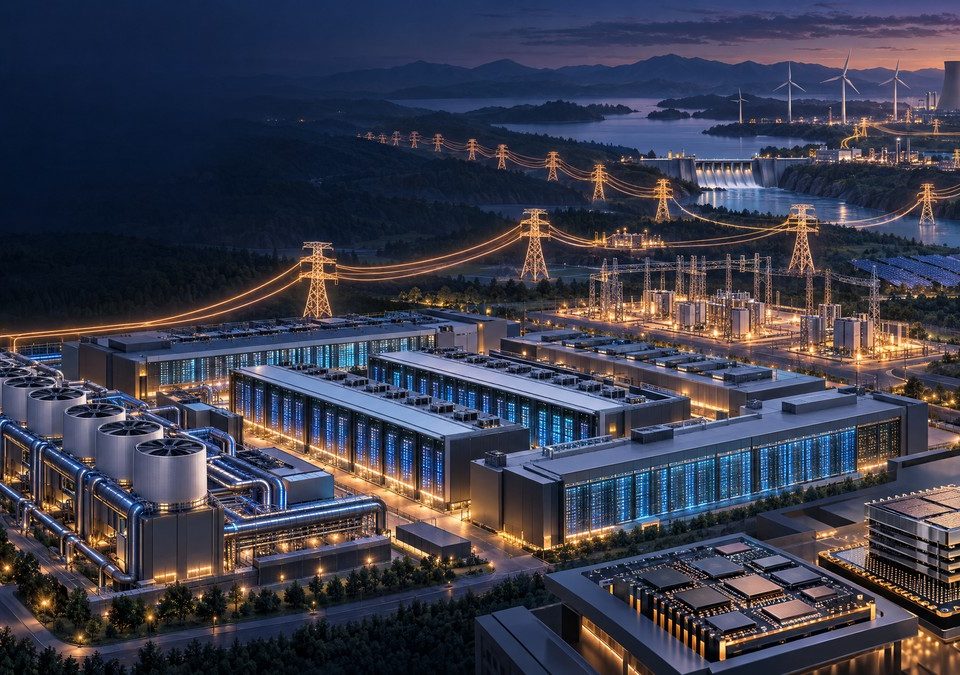
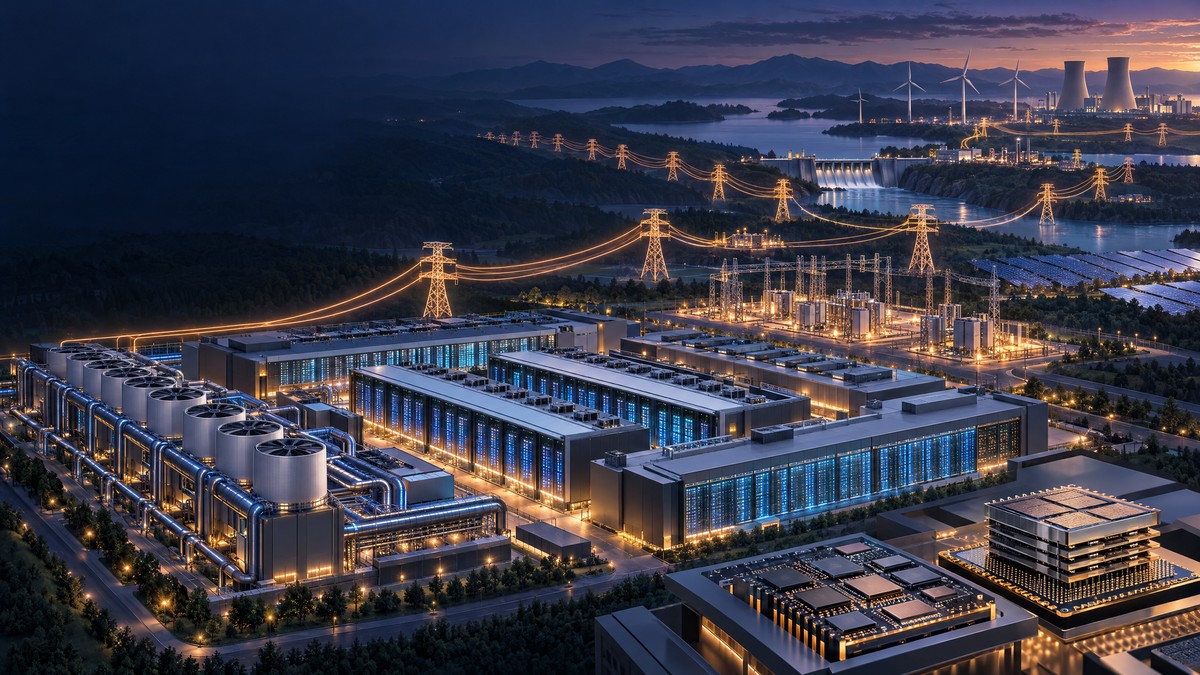
CoreWeave’s latest results show the AI-cloud market is still expanding at extraordinary speed, but they also make the sector’s central risk harder to ignore: the infrastructure race requires enormous upfront spending and increasingly complex financing.
Revenue is scaling faster than the business is becoming profitable
CoreWeave reported third-quarter 2026 revenue of US$3.661 billion, up from US$1.365 billion in the same quarter a year earlier. Operating income was US$207 million, but the company still recorded a GAAP net loss of US$709 million, including US$846 million of net interest expense.
On a non-GAAP basis, adjusted EBITDA reached US$2.256 billion, with a 62% margin. That measure shows the cash-generating potential of the underlying service, but it does not remove the financing burden created by building and equipping data centres before customers can use them. CoreWeave’s reported net loss and interest expense remain the more important figures for assessing the company’s balance-sheet risk.
Reuters reported that CoreWeave expects to become profitable on an adjusted basis in the first half of 2028. The company also said it would avoid unsecured debt markets at current yields and expects to raise less than US$5 billion in additional capital through 2027.
Demand is strong, but capacity is the bottleneck
CoreWeave said its revenue backlog reached approximately US$132.5 billion at the end of September, up from US$104 billion at the end of June. Backlog is not the same as recognized revenue: it depends on delivering capacity and satisfying the conditions in customer contracts. Still, the increase indicates that demand for contracted AI computing remains well ahead of the company’s currently available supply.
The company added more than 200 megawatts of active power during the quarter, taking its active footprint above 1.7 gigawatts. Contracted power rose above 4.6 gigawatts. CoreWeave also said it expects about US$9 billion in customer prepayments and deposits over the next three months, which helps fund construction and equipment deployment.
That model is strategically important. Unlike a general-purpose cloud provider that can spread investment across many services, an AI-focused operator can tie some capacity decisions to signed customer commitments. This reduces demand risk, but it does not eliminate execution risk. Delays in power connections, data-centre construction, networking or accelerator delivery can still postpone revenue while interest costs continue.
Capital spending is rising with the revenue forecast
CoreWeave raised its full-year 2026 revenue guidance to US$13.0 billion–US$13.3 billion and its adjusted operating income guidance to US$1.275 billion–US$1.375 billion. It also raised the low end of its 2026 capital-expenditure forecast, which now stands at US$37 billion–US$39 billion.
The company said the higher spending reflects an expectation that it can deploy infrastructure and deliver it to customers sooner than planned. It expects to exit 2026 with annualized run-rate revenue of US$20 billion–US$21 billion and more than 1.85 gigawatts of active power.
The numbers illustrate the trade-off facing the entire AI infrastructure industry. Faster deployment can capture demand and increase revenue, but it also increases depreciation, interest costs and dependence on continued customer expansion. In the third quarter, Reuters reported that CoreWeave’s capital spending rose to US$14.5 billion from US$9.4 billion in the previous quarter.
Why the result matters beyond CoreWeave
CoreWeave is a useful indicator for the AI-cloud market because it sits between specialist infrastructure providers and the largest hyperscalers. Its results offer a direct view of what it costs to turn demand for accelerators into commercial capacity.
The company’s growth also strengthens the case for continued investment in power, networking, storage and advanced cooling. These constraints increasingly determine how quickly AI services can expand. Guava Insights recently examined Google’s US$17 billion Wyoming data-centre plan and the push for sovereign AI infrastructure in South Korea; CoreWeave’s results show the same trend from an infrastructure operator’s financial statements.
For enterprise customers, the practical lesson is not that every organization should move workloads to a specialist AI cloud. It is that capacity availability, contract duration, geographic location, power constraints and exit options deserve as much attention as accelerator specifications. A low per-hour compute price is not useful if the required capacity cannot be delivered when a production project needs it.
The signal to watch next
CoreWeave’s third-quarter results confirm that AI-compute demand remains substantial. They do not, by themselves, prove that the current buildout will earn attractive returns. The next evidence will come from whether backlog converts into revenue on schedule, whether interest costs fall relative to operating income, and whether customers continue to prepay for capacity as infrastructure spending rises.
For now, CoreWeave is growing quickly enough to raise its forecast while increasing spending. That is a strong demand signal, but also a reminder that the AI infrastructure boom is being financed through a high-stakes race between deployment speed and financial discipline.
Sources
- CoreWeave: Third-quarter 2026 results and business outlook
- Reuters: CoreWeave beats quarterly revenue estimates as AI demand defies growing doubts
Feature image: AI-generated conceptual illustration for Guava Insights.